Saturday, September 22, 2012

Heavenly Christmas Film Classics!


Our brand new release just in time for the holidays is "Heavenly Christmas Film Classics" as fully described on the front and back DVD covers shown above.  Watch a video preview down below.  You can read more about it or order today from  "Lost and Rare" site.  It shortly will be for sale at Movies Unlimited, Alpha Video, Amazon and others.  This rare collection of vintage holiday films is the perfect Christmas gift to watch on Christmas Eve after opening presents.

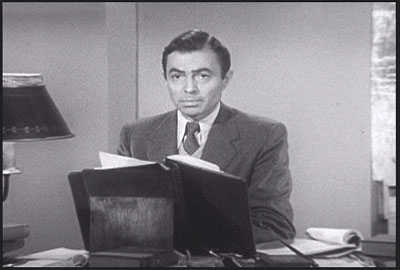
The idea of issuing an exclusive line of DVDs began about a year ago when partner Derek Myers acquired the James Mason film "Star of Bethlehem" which neither of us had heard of.  We did not know the celebrated, accomplished British actor was a Christian who wanted to produce religious films as an expression of his faith.  He found time to make this film between his work on A Star is Born and 20,000 Leagues Under the Sea.   This "Portland Production" is named after his daughter who appears in the film as Mary, mother of Jesus.  All actors in the Nativity re-enactment are children, with Jerry Mathers as Joseph!  James' wife, Pamela, also appears in this family production.  The film is not listed at IMDB, although a second Portland Production called "The Child" is.

Derek and I wanted to put out this one film ourselves and found five other rare Christmas films to go with it.  Bob Campbell joined the team to form "Lost and Rare Film & TV Treasures" series early this year which resulted in Heavenly Christmas and Golf Mania! becoming our third and fourth DVDs.

The word "Heavenly" crept into the title since the films are of a spiritual nature.  Two of them tell the eternal Nativity story about the birth of Jesus Christ.  Two others amazingly tell the same historical story about the creation of the beloved "Silent Night" Christmas carol in 1818, although you will find them remarkably different in execution.  The final two films are set at Christmas time.  Here they are:

Silent Night: Story of the Christmas Carol 
(1953) 13 min., color.  Excellent story about the creation of the famous carol in 1818.  While this film has been issued in other Christmas video collections, this is the first time in Color!

Christmas is Magic 
(1953) 24 min.  Robert Hutton plays a war veteran with amnesia who is taken in by widow Frances Rafferty and her son on Christmas Eve.  She helps him recover his memory while forming a bond.  Produced for the obscure TV anthology series "Your Jeweler's Showcase."

Star of Bethlehem 
(1956) 12 min., color.  Story of the Nativity directed by Lotte Reiniger using her unique silhouette animation style.

Three Young Kings 
(1956) 29 min.  In Latin America three boys carry Christmas gifts to the mission children dressed as the Three Wise Men.  When they ride through the poor section of town, the boys decide to give the presents to the ragged children following them, which causes a crisis in conscience in the community over the true meaning of giving.  This episode of DuPont Cavalcade Theatre is introduced by Thomas Mitchell.


James MasonStar of Bethlehem
(1954) 26 min. Produced, directed by and starring James Mason, with the participation of his wife, daughter Portland and other child actors. Mason and his wife first read sections from the bible that lead up to the birth of Jesus. He visits his daughter in bed and their discussion leads into an enactment of the Nativity starring a cast of children. Jerry Mathers plays Joseph. A heartfelt, inventive and personal religious project by a Hollywood star at the height of his fame.
Starlight Night
(1939) 30 min. Opulent British docu-drama about the creation of the famous Christmas carol centers on a stern father estranged from his daughter.

Here are some prevue scenes:


Visit my websites at Festival Films and Lost and Rare.

Saturday, September 15, 2012

Now Here's A New Idea!

In the past week I have had three fortuitous conversations in the use of public domain films along the lines of the Café Roxy credo -- show films anywhere and anytime and be creative.  Is that my credo?  It sounds good anyways.  Anytime.  Any place.

(The Hercules poster will become clear in due course.)

The first was seeing an actual TV schedule of how good customer RCN/TV was integrating PD films in the Pennsylvania area with local programs of gardening, cooking, high school football games, the Phil Stahl Show, Jolly Joe (?!) and others.  I wonder what Midnight Mausoleum is?  A Friday afternoon block consists of one TV show after another in this order: Roy Rogers, Robin Hood, Beverly Hillbillies, Petticoat Junction, Ozzie and Harriet, Jack Benny, Date with the Angels, Life with Elizabeth, Mr. and Mrs. North, Man with a Camera and One Step Beyond.  Then local football.  Please peruse their schedule.

I preach at my Café Roxy website how any bar or restaurant or coffee shop can show public domain films as background filler or scheduled shows.  I have visited a few bars and discussed the idea and left free samples.   No takers in the bar scene, but I am still convinced that if someone showed 3 Buster Keaton shorts every Wednesday they would be swamped after word got around.  They could run them silent and re-run the same three again and again.  I now understand that bars simply don't have the time to fiddle around with a DVD player.

Along came a new company last week with a new idea.  I will keep their name and midwest location private.  They are already broadcasting local high school football in bars and grills via a live and scheduled feed.  They plan to add PD content when there aren't any live sports.  I sent a Lotsa Laffs! and free Roxy Sampler to get them started.  So they do all the work and the bars just sign up at a low fee.  Additional expansion calls for streaming to residential and additional restaurants, bars, grills, etc.  Now if I can only find a sports-free night where they can try my Buster Keaton night.

The most interesting call came out of the blue from a man with a foreign accent who wanted to buy all 29 of my cartoon DVDs.  After saying fine, great and assuring him they were all in the public domain I asked what he wanted to use them for.  This is a tricky question as it may sound impolite, so I quickly added that he did not need to tell me, his use would not change the price and he could use them for anything he wanted to.  Price does depend on format since BetaSP masters cost a lot more.  I also need to discourage users who want to add a new sound track or change the films in any drastic ways that might infringe on image rights of the actors involved.  For instance you can't add a funny voice track that has John Wayne or Cary Grant swearing.

So I asked judiciously "Why do you want all my cartoon programs?"

I did not expect: "To give away in newspapers in Greece."

That idea explains itself -- give away a free DVD each week to encourage newspaper subscriptions.  That's a new one on me, though it has occurred to me that companies like micro-wave popcorn could give away DVD freebies that would only cost pennies to mass produce.  We talked a bit more and I gave him the idea that 6 or 7 cartoons on one DVD would be a nice bonus rather than all 17 Betty Boop cartoons that come on my first cartoon volume.  That way they could stretch 29 cartoon DVDs into 52 or so of their releases.  They could also mix up the cartoons with a single disc containing a Betty Boop, Popeye, Tom and Jerry, Fleischer Color Classic, Little Lulu, etc.

When I shipped off the cartoon order I included a later idea -- add a serial chapter to each disc to really hook newspaper subscribers.  Serials have worked in newspapers since the 1800s.  They still work on TV in the soaps and shows like "24."  Zorro and Flash Gordon can grab an audience today.

In Greece.  And that Hercules poster up above?  Old Herc is greek.

Visit my websites at Lost & Rare and Festival Films.

Sunday, September 2, 2012

"Golf Mania" Mania!

I am writing again about our upcoming Golf Mania release at Lost & Rare because the DVD has been authored and a release date has been set for Sep. 25.  This is well in time to get into online and printed catalogs for film fans -- Movies Unlimited, Alpha, Amazon, etc. -- as well as online golf retailers and golf stores so it can be promoted as "The ideal Christmas gift for the golfer in your life!"  No one golfs on Christmas Day up here in Minnesota, but the whole family can watch Golf Mania with Dad.  Almost everyone knows a golfer they would like to buy a unique holiday gift for that only costs $20 bucks!  Think about it.

The Golf Mania DVD runs about 130 minutes.  We plan to compile the highlights into an hour film that will delight non-golfers as well.  The idea is for fundraisers held at country clubs to show the short film as part of the entertainment activities, then sell or give away the complete film as door prizes.  Ideal for gift baskets at golf tournaments!  The fundraisers could either be for the club or staged by any group, any time and any place.

A last minute enhancement to Golf Mania was a new music and effects track added to the Larry Semon silent comedy GOLF.  Derek Myers added suitable classical music plus dozens of golf hits, putts, gun shots, explosions and other slapstick noises.  The result is a big hit with audiences who now know when to laugh or react and who instinctively feel the 1922 film has been modernized for their enjoyment.  GOLF (1922) features Oliver Hardy as the villain and has not been released in any major collections of Hardy's early comedies.

We are busy searching out other golf films in the public domain or that we can license to include in a projected sequel: Golf Mania 2!  A few clips are in the prevu video below.  Others in hand or on tap include:

Smooth Approach (1939)
A Pictoreel Sportscope produced by Frederic Ullman Jr., supervised by Frank Donovan.  Pro golfers Ed Dudley (smoothest swing in the game), Dick Metz (star of the '38-39 winter circuit), Jimmy Thompson (longest driver in golf) and Horton Smith (most consistent putter) demonstrate their golf skills at scenic Pebble Beach course bordering the Pacific ocean.

Pictoreel presents Brother Golfers (1938)


The six pro golfing Turnesa Brothers cruise to Guatemala where they compete in a friendly family match of 3 oldsters vs. 3 youngsters.  All six drive to start each hole, then continue from spot of the best drive.  Nip and tuck down to the 18th green ... who will win?

Pictoreels were produced by RKO Pathé and issued as sports one-reelers that played in movie theaters like newsreels, except each concentrated on a specific sport like golf, tennis, football and baseball.  They were made for general movie audiences and entertain just as well today to non-sport fans.  Who doesn't enjoy watching a good golf film?  If you have read this far, then you surely are included!

Celebrity Golf with Sam Snead (1960)
Golf legend Sam Snead plays a round of golf with Hollywoods biggest celebrities for prize money going to their charity. Each episode is hosted by Harry Von Zell and filmed at Lakeside Country Club. At the end of each match, Snead gives the celebrity golfer a lesson in the finer points of the game.  The episode we have includes Jerry Lewis.  The Golf Channel revived this series in 2003 by adding pop up factoids to the show and issued six episodes on DVD (now out of print).  However, early checking reveals that the shows may be in the public domain and we are checking further.

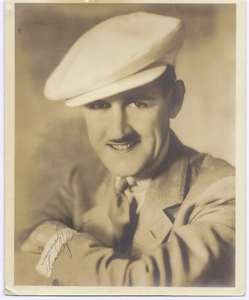
Charley Chase
In golf hat?
All Teed Off (1930)
Hal Roach production starring Charley Chase, Thelma Todd, Dell Henderson, Edgar Kennedy and directed by Edgar Kennedy.  While all of Charley Chase's sound films are still protected by copyright, the extremely rare and longer French version of All Teed Up is in the public domain.  I saw the film once at a Syracuse Cinefest and the French film with subtitles runs a full 30 minutes.  As I recall, the comic golf game proceeds to play all 18 holes in order.  Being able to include the film is not yet definite but was suggested by the world's foremost Hal Roach authority and collector.

Here is a sneak peak at some fun golf clips that are not on display at Lost and Rare Golf Mania! page.  The Little Lulu cartoon is "Cad and Caddy."  The Three Stooges live segment was filmed to appear before and after 1962 cartoons in The New Three Stooges show.  This series is in the public domain, but our use of Stooges film clips in a Goofy Golfer Newsreel might depend on additional rights clearance.


Please contact me if you have any rare golf shorts that were made to be shown in movie theaters.  Visit my websites at Festival Films and Lost & Rare.

Saturday, August 25, 2012

On the Road (again) with Bing & Bob

Beyond legendary entertainers, Bing Crosby and Bob Hope were very generous, patriotic Americans.  They filled their days with a variety of work and play.  A typical week (1930s thru 1950s) involved rehearsing and performing a radio show, filming movies, making personal appearances, filming TV shows, playing golf, visiting the race track and in Bing's case making records.  Still they found time for worthy causes like entertaining the troops, government public service films, hosting the Oscars, religious films and honoring golf caddies!  Since they were friends they often teamed up for charity.

My friend since 1970, Bob DeFlores had a special love for vintage music and Bing Crosby.  He collected rare Crosby films and was privileged to visit Bing in 1977 six months before Bing's untimely death.  Years later this meeting led to an association with Kathryn Crosby and several trips through Bing's basement film and audio collection to help evaluate and preserve other rare films.

A message to sailors in "Road to Home"
In 1994, Bob and I slowly realized that he had many rare films that happened to be in the public domain, and I had a video company that could sell them.  We put together a 90 minute collection of obscure Bing Crosby/Bob Hope shorts, called it On The Road With Bing and Bob and then looked around for Bing Crosby fans.  They were not hard to find!  At the time various fans supported two regular magazines packed with photos and information, plus a monthly newsletter.  The sumptuous and informative BING magazine by the International Club Crosby, edited by Malcolm MacFarland and Greg Van Beek, is still published 3 times a year.  Read all about the magazine and join the club at the ICC website.

"The Fifth Freedom"
So Bob and I issued the VHS video in 1995 and were widely publicized in the Bing Crosby magazines, which resulted in over 200 sales.  Five years later we offered the same films on better quality DVD for another round of sales.  We also issued everything we had about Bing Crosby that happened to be in the public domain, such as Bing's Mack Sennett Shorts, the 1957 Edsel Show, Bing Crosby Cavalcade and more.

About four years ago I arbitrarily stopped selling the films because we had reached all the Crosby fans and Bing Crosby Enterprises was starting to produce their own music and film projects.  Be sure to visit their official website.  However, since I now sell on Amazon.com where you can buy it now, I thought I would reissue our first release to see if Bing and Bob fans might find it there.  All of the films are in the public domain, they have not been chosen by Bing's estate for DVD release and many are still quite rare.  I added three clips as noted in the list below.


DVD Re-issue
On Sale Now!
Theatrical Trailers to Road to Singapore, Road to Zanzibar, Road to Morocco, Road to Utopia and Star Spangled Rhythm.

The Road to Home (1945) Bing and Bob caution sailors not to jump ship at end of the WW-II as they reminisce about their Road pictures.  Who even knew the armed forces had this kind of problem?

Command Performance (1944) Bob Hope, Jerry Colonna, June Allyson, Gloria De Haven and Francis Langford entertain the troops.  Bob hosted over 40 of these variety shows that were sent to the troops during WW-II. 

The Fifth Freedom (1951, Color)  Bob Hope, Bing Crosby, Perry Como and Arthur Godfrey remind us of our American freedom of choice.  On the surface a patriotic film about american freedoms, but everyone smokes Chesterfield cigarettes!  Contains some great small-town Americana scenes from 1951. 

You Can Change the World (1954)  Bing and Bob join Loretta Young, William Holden, Irene Dunne, Anne Blyth, Paul Douglas, Rochester and Jack Benny to hear Father Keller tell how all of us can help change the world for the better.  Bing sings “Young American" in this episode of The Christophers TV show.  We traded our excellent copy to The Christophers in 1996 in exchange for their film "Faith, Hope and Hogan" that is included in the September release Golf Mania. 

Excerpt from The Edsel Show (1957)  Frank Sinatra joins Bing on a musical road tour of the world until they run into old ski nose himself.  This is not a public service film, but continues the theme of rare Crosby/Hope "Road" films, this time with Frank subbing for Bob.  (Newly added to this video release.)  

1954 Academy Awards Show (1954)  Bing Crosby comes to the dais to help Bob Hope hand out music Oscars.  (Newly added to this video release.)

Honor Caddie (1954)  Color.  Bing and Bob in an excerpt from a public service short honoring golf caddies.  (Newly added to this video release.) 

The Road to Peace (1949)  Bing joins Ann Blyth in an inspirational plea for world peace.  They sing “When Irish Eyes are Smiling."  Added last to the disc since the message goes on a bit long! 

These films are highly entertaining today.  The following clip from "You Can Change the World" shows Bing Crosby, Jack Benny, Father Keller and Bob Hope's phoned in contribution.


You can purchase On the Road with Bing and Bob directly from Festival Films right here!

Visit my websites at Festival Films and Lost and Rare.

Saturday, August 18, 2012

Public Domain Movies for Everyone - Part 2!


While Festival Films started selling public domain films on 16mm to colleges in 1976, the focus shifted to other sales but then back to public domain movies around 2000.  The big change was caused by the introduction of DVD Video format in 1997.  (It does seem like it has been around a lot longer, doesn't it?)  I had resisted selling VHS dupes of public domain films because every time you copy VHS the picture quality markedly declines, mainly in the focus softening.  This is not the case with DVD -- you can copy and re-copy with minimal loss of quality.

One day my friend, documentary filmmaker Don McGlynn, suggested to me and Bob DeFlores that it might be wise to collect DVDs of every public domain film to have our own stock footage library.  We never acquired a joint library but the idea stuck with me.  I got an early Pioneer brand DVD recorder without a hard drive and transferred some VHS collections that passed through my hands on the way to customers: around 90 Ozzie & Harriet TV shows and 50 Roy Rogers.  I swear the quality sharpened somewhat when they were digitized from VHS to DVD.  I later got a Pioneer recorder with hard drive so I could edit DVD-R discs for re-sale, followed by years of making masters from VHS, DVD, laser discs, 3/4", BetaSP masters, etc., to create a library of features and TV shows.  Many of these are listed for sale at my Festival Films website.

There are still a lot of films to get better quality of.  There are still a lot of public domain films that have been lost or unavailable for years.  It's an ongoing, adventurous and exciting quest to find original 16mm prints and make new transfers.  But back to today's subject ... who buys, uses and enjoys public domain films today?  MOVIE FANS of course!  If the vintage films did not still entertain, enlighten and amaze then Festival Films would not exist.  However, a quick trip through my website reveals that I don't really sell DVDs direct to the public.  I sell public domain films to others who then reach a much broader public.  Here is a brief look at my major customers over the last ten years.

DVD Companies
Around ten years ago I formed an alliance with Hollywood Select Video, a company that had pioneered VHS sales of public domain films in Target, Best Buy and Walmart stores in the late 80s.  So HSV had 1" masters from which they could make 3/4", BetaSP or DVCam masters for other companies.  Acting as a salesman I sold high quality masters (not copies of VHS or other DVDs) to Timeless Video (Medic), Mill Creek (westerns, crime, TV shows for their multi-packs), Genius Entertainment, Alpha Video and others who in turn authored the films and TV shows and issued as their own DVD releases.  Today only Alpha is still actively issuing new public domain films of basically anything they do not already have.  Alpha will shortly release the 1941 airplane film Power Dive and possibly Lure of the Islands (1942) from new film to video transfers from me.

Television
There are lots of independent, college, local cable access, etc., TV stations that could add inexpensive programming that the public has always loved and still does.  How cheap?  On volume sales it comes down to about $5 for a half-hour TV show they can run again and again.  The baby boomers who grew up on 1950s TV are entering retirement, but the shows do not depend on nostalgia to build an audience since they are just as entertaining seen for the first time.

I advise TV stations to run the Café Roxy Matinee series or create Crime Busters, Comedy Cavalcade or Western Range one or two-hour time slots in which they can rotate the many genre TV episodes.  Classic movies have never been more popular as evidenced by the TCM film festivals, but local TV programming is usually free.  Try using a host to introduce the films.

Movie Theaters
At least once a month I hear from someone with this story: "Our small town just got some money to remodel the old opera house/1930s movie theater.  We put in a projection TV system and want to try some of your movies."

My suggestions are to look at the Café Roxy posters with friends and family.  If a show looks exciting from the poster, then it may attract an audience since they can use the poster to promote each show.  Another idea is to involve local restaurants and coffee houses to both display the flyers and offer free admission with any receipt from said places.  Charge $1 or $2 admission, rather than free, and make money off concessions.  The main goal of early shows it to get an audience who has fun and passes the good word along.

Show the Matinees in the fall, not summer when folks are away.  Try late night horror shows on Friday-Saturday after your regular features.  Show Buster Keaton!  He always wows em.  Start a film society series.  Show westerns if you are in the south where they are still popular.  Bad sci-fi like Plan Nine From Outer Space or exploitation like Reefer Madness always draws a crowd.  Here are the top ten reasons to try Roxy program in movie theaters:

  1. Families can let their kids run amuck, have fun and buy popcorn!
  2. The old Adventure Serials can still bring back repeat viewers!
  3. Classics & Clunkers, Westerns, Horror, Sci-Fi, Adventure & Mystery = Variety for any taste!
  4. Late night "Turkey Fests" will attract the hip crowd!
  5. Saturday Matinees will attract kids, families and fogies!
  6. The inexpensive DVD programs allow you to charge just $1.00 admission, or even offer Free Movies, and profit off concession sales!
  7. Free Roxy posters help promote each show!
  8. The Roxy Sampler Show is free for you to try out!
  9. Show "Oldies but Goodies" that people remember fondly!
  10. And the Number One reason to try Roxy shows: Be the only theater in town doing this!
Bars and Coffee Houses
Café Roxy was started to convince these places to try free movies.  See my mission statement at top of the blog page.  One idea that has been tested is cartoon brunches.  Movie trailers can run as background images.  Another is silent comedy night where you can run the films silent and patrons may or may not get into, but once they laugh uncontrollably at a single Buster Keaton short they will come back the next Wednesday for more and bring their friends.

The best idea is to create film society evenings, which works well on college campuses.  This involves rounding up a crowd first and then opening it to the public thru flyers.  You certainly need an area or side room fixed up for DVD projection or large screen TV, perhaps a party room often used for birthday parties.  Starbucks will never have the flexibility to try this but independents have an opportunity to stand out and bring back audiences, who by the way eat and drink freely while they watch.

Direct Sales to the Home Market
This is new to me!  The Lost & Rare series aims to sell very rare, previously unavailable films to the public at a low price.  We also sell thru Movies Unlimited, Alpha Video and Amazon.com.  Much more about our first two releases and upcoming DVDs are on the L&R website.

Please browse my original Festival Films site to see which films are in the public domain.


Saturday, August 11, 2012

Public Domain Movies For Everyone!

Festival Films was founded in 1976 to sell public domain films to colleges and libraries on 16mm film format.  Public Domain Films & TV Shows are ones that are no longer protected by copyright.  Anyone may do anything they like with them -- copy them, sell them, show them on TV or in movie theaters or stream them on the Internet.

In those primeval times before home video, colleges with film history courses needed to rent the same classic films year after year, films like The Great Train Robbery, Birth of a Nation, Potemkin, Cabinet of Dr. Caligari, Grand Illusion and later films by Luis Bunuel, Akira Kurosawa and Ingmar Bergman.  Belive it or not, for many years Seven Samurai, The Seventh Seal and Viridiana were in the public domain in the USA.  Film history classes were happy to buy new prints since they often rented scratched and splicy prints that were missing scenes or would break down in the middle of a showing.

Time out!  Like many of my rambling blogs, I started this one to discuss various markets where public domain films are alive and well today.  I see I won't get there.  Next week, for sure.  Today I delve a bit into the history of Festival Films.

I had started collecting 16mm films in 1968 and attended my first Cinecon that year (#4) in Hollywood where I met teenage film fan Leonard Maltin and producer Ed Finney who had discovered Tex Ritter.   I also met Society for Cinephiles founder Sam Rubin and early 8mm and 16mm film dealers like Murray Glass, who issued a rental and sales catalog of films.  A bit later I made contact with Tom Dunahoo of Thunderbird Films and Bob Lee of Griggs Moviedrome, Celebrity Films, Niles Films and others who issued classic films in catalogs.  They sold new lab prints, legally, and as many as anyone wanted, which is how I learned about public domain films.  Because they sold to the 16mm film collector market, their prices were reasonable.

Parallel to these 16mm discoveries in the 1970s, I ran a film society on the University of Minnesota campus 1971-1974.  This is where I met my future wife Chris when she came to make audio tapes of Marx Bros. soundtracks.  She came extra early so she could set up her recorder in the front row.  I had a partner, R. Dixon Smith, and we alternated driving each other to the University campus, me a Volvo station wagon and he in his Volkswagen bug.  We must have averaged 100 bodies every Friday and Saturday where we only charged $1 admission for the first years.  Attendance was good since none of the older films were shown on Twin Cities TV and home video did not arrive until the 1980s.

We called it the Xanadu Film Festival after the poem "In Xanadu did Kublai Khan a stately pleasure dome decree..."  The name later morphed into Festival Films.  Xanadu Films?  Might have been a better name, but that's old history.  The most memorable shows were 3-hour Cartoon marathons.  We also caught the tail end of an incredible era where one could rent Casablanca and every other Warners classic from Budget Films for only $35 plus shipping.  I don't think we were supposed to advertise or show them in public where admission was charged, but then no one told us to stop and Budget did not seem to mind.  I also bought/collected prints that I could show in the film society.  Buster Keaton was a big hit and all of his two-reel shorts were in public domain.

It was during the film society days that I became aware that colleges needed new prints of the 16mm films they rented every year.  I recall attending a home screening of some film professor who had his own silent, dupey print of Caligari, and it was pretty dreadful.  The Griggs print was much better and had an orchestra score.  This led to the idea that I could put out my own catalog that gathered together the best quality prints from various labs of films that would appeal to film history classes.  I also discovered the labs would give me a discount for selling multiple prints of the same film!  The only hitch was they needed to be paid in advance while colleges paid by purchase order net-30 ... or longer.

In 1976 raw film stock from Eastman Kodak was dirt cheap compared to now.  2 cents a foot vs. 20 cents now.  (I made that up without checking but it may be close.)  Blackhawk Films was still selling a Laurel and Hardy two-reeler for $52.  I recall buying new color cartoons for $20 in the 1970s and selling them for $35.  So the cost for a school to rent Potemkin was maybe $35 from Films Inc. but to buy a new print from my 1977 catalog was only $139, and they could keep it year round and show dozens of times before the print started to wear out.

This was long before the Internet so I needed to buy a group of mailing labels to colleges that had film courses.  Chris and I got married in 1976 and she helped with the first catalogs, ordering, shipping and the whole shebang.  I was still working in the prop department at the Tyrone Guthrie Theater until 1981, so Festival Films was planned as a sideline hobby-type business now that I was no longer running the film society.  We mailed out the first printed catalog in 1976 (dated 1977) with a cover photo of Peter Lorre in "M".  The idea worked and quickly took off.  Had I been trained in business or sold films full time, I might have done really well until home video supplanted 16mm film libraries in schools by the mid-1980s.

A year or two after we started Festival Films, another company started doing the same thing -- selling 16mm classics to colleges.  I think their name at the beginning was Reel Images, or at least it turned into that.  One of the partners was a friend, Marty Kearns, who we visited in Hollywood when he was in full swing working out of a rented building with at least 3 employees busy putting films on reels and shipping them out.  His partner was Jon Sonneborn who had trained in marketing and knew how to reach every college and library in the country who had a film collection.  That day I saw how much bigger my business could have been had I aggressively marketed it from the start.

Sales of 16mm films began to taper off by 1985.  Colleges were shifting to VHS videos, which in the 1980s cost quite a bit.  Anyone remember prices of $59.95 or $79.95?  I went through a period of selling VHS at high retail prices to the same customers that had been buying 16mm prints.  This included sales of ALL FILMS that were legally issued by the copyright owners.  Most films are of course still copyrighted today.  Colleges wanted to show Citizen Kane to their students and they were legally able to if they bought a commercial video.

There was an exclusion in the copyright laws that made it legal for schools to show these copyrighted films in the classroom when a film history teacher put the film in context and discussed it afterwards.  This is different than kindergartens showing Snow White, etc., as entertainment or baby sitting, which was widely done but not really legal at the time.  Canadian schools did not have the same exception law and needed to buy videos with public showing rights attached, and I never got into that.

Next week I will talk about Festival Films shifting back into public domain films full steam, let's say around the year 2000 for simplicity, and the many venues that are happy to use them today.

Wondering which films are in public domain???  Visit my website at Festival Films.  Find out about current and upcoming rare films at Lost & Rare.

Saturday, August 4, 2012

Ed Wynn Show - Lost & Rare Episodes

It's easy to love Ed Wynn (1886-1966)!  He's just such a friendly guy and often hilarious.  Ed began his career in vaudeville in 1902 and rose to star with the Ziegfeld Follies by 1914.  During The Follies of 1915, W.C. Fields allegedly caught Wynn mugging for the audience under the table during his "Pool Room" routine and knocked him unconscious with his cue.  Wynn wrote, directed, and produced many Broadway shows in the subsequent decades, and was known for his silly costumes and props as well as for the giggly, wavering voice he developed for the 1921 musical review, The Perfect Fool.  (Thanks to Wikipedia for that info!)  

Less known is that in 1922 Ed became the first big-name vaudeville talent to appear on radio.  The single broadcast in 1922 was over WJZ in Newark, and Ed was so traumatized by mic fright that he refused to try again until ten years later when Texaco offered him a large sum of money in 1932.  Ed began broadcasting his "Texaco Firechief" shows on Tuesday nights.  Like many vaudeville performers who turned to radio that decade, Wynn insisted on playing for a live studio audience wearing a colorful costume with a red fireman's helmet.


His early film excursions were not as successful, though they would be fascinating to see today to figure out why.  In the 1930 Paramount comedy Follow the Leader Ed is teamed with Ethel Merman and Ginger Rogers, while in The Chief (1933) he brings his radio character to the screen.

Ed Wynn is chiefly and fondly remembered today for his TV and feature film work late in his career, such as Requiem for a Heavyweight (1956, Playhouse 90), The Diary of Anne Frank (1959), Mary Poppins (1964) and dozens of TV guest appearances.  

My chief interest today is in his pioneering television work as the first vaudevillian and first comedian to host TV's first Hollywood-produced variety program -- The 1949-1950 Ed Wynn Show.  Ed won one of the first Emmies in 1949 while opening the TV door for Milton Berle, Jackie Gleason, Martin and Lewis, Abbott and Costello and everyone else.  The show featured the first television appearances of The Three Stooges, Buster Keaton, Lucille Ball, Joe E. Brown, Dinah Shore and literally dozens more.  Since all TV network shows in 1949 were produced in NYC, this was the first chance for many big names to appear on live TV.  A list of guests in all 39 shows can be perused at tv.com.

Although broadcast live on the west coast, 16mm kinescopes were made to show in the East and Midwest.  Some prints survived and have been issued on video, while others are (optimistically) waiting to be discovered.  Here are the episodes that I am aware of currently being offered:


#4 - Dinah Shore
#5 - Victor Moore and The Merry Macs
#10 - Celeste Holm
#12 - Buster Keaton, Virginia O'Brien
#13 - Buddie Ebsen, Hattie McDaniel
#19 - Ann Sheridan
#22 - Gloria Swanson
#23 - Elsa Lanchester, Reginald Denny
#25 - Three Stooges, Helen Forrest, William Frawley
#30 - Vera Vague

In addition, a long-time colleague transferred these episodes from kinescopes many years ago, but they are currently in storage and difficult to access:

#3 - Mel Torme
#14 - Lucille Ball, Desi Arnaz
#16 - Howard Duff, Olga San Juan
#28 - Richard Arlen, Ella Raines
#33 - Marie Wilson, Jack Holt

If you know of any others out there, please advise, since this only amounts to 15 of the 39 episodes.  We are hoping to include the Lucille Ball episode in our first volume of Primeval Television, currently in preparation for the Lost & Rare series.

Any film clip of Ed Wynn bringing vaudeville to TV will communicate his shtick and appeal better than any words.  From episode # 5 here is a touching and illuminating tribute from Ed Wynn to Victor Moore.  Victor is a wonderful character comedian who shines in Swing Time, It Happened on Fifth Avenue and many more, but in 1902 he was the absolute king of vaudeville....


Ed Wynn had lots of heart.  In 1958 Ed made a pilot TV show for a situation comedy to also be called "The Ed Wynn Show."  There is a list of 16 episodes, but I am not convinced they were actually produced and broadcast.  Here is an excerpt from the Pilot that I currently offer in Lost & Rare TV Pilots.


Please visit my websites at Lost & Rare and Festival Films!