Saturday, July 30, 2011

Sing-Along With Screen Songs!

Audience Sing-Alongs to words projected on a screen go back before 1900 using magic lanterns.  The famous "Bouncing Ball" debuted in 1924 in the Max Fleischer "Ko-Ko Song Car-Tune."  The first song was "Oh Mabel."  A superb discussion is in this Nov. 2007 entry in the  Bijou Blog (that I may have helped write, not sure).  Fleischer made many sing-along cartoons in the silent era with a seamless transition into the sound era  up through 1938.

In 1945, Famous Studios, successors to the Fleischers, revived the Screen Songs as an all-animated series in color. The earliest color Screen Song was part of the Noveltoon series -- "When G.I. Johnny Comes Home Again" -- and was released on February 2, 1945.  This series produced around 40 cartoons thru 1951.  Both the Fleischer and Paramount sound ones are listed by title at Wikipedia."

Audiences singing out loud and together in a movie theater was tremendously popular, which may be hard to believe by anyone who did not share the experience.  The words appeared onscreen as the Bouncing Ball bobbed from one word to the next so the audience was never in doubt just what to sing, in case they were not familiar with the song.  Over 25 of the color ones are in public domain and I include them in volumes of Movie Memories.  Seniors sang along way back then in theaters in the 1930s and 40s and they sing along today.

Although the cartoons are clearly in the public domain, some of the songs are still copyrighted.  In most cases you can use films (with © music) as public domain without paying royalties to the owner of the music.  The theory goes that the music was paid for when the film was made and when the entire entity goes into public domain, then you can show, sell, broadcast or use the complete film anyway you want.  If you take an excerpt out of a film to use in a documentary, then you need to separately clear rights to any music involved.  Most TV stations still have an arrangement with ASCAP that allows them to show any films without clearing music rights.  I don't know what rules might apply for using public domain films with music on the Internet.

The only time I recall being contacted about music was 30 years ago re. the score by Virgil Thomson on "The Plow That Broke the Plains" (1936).  I offered it for sale on 16mm at the time, which rarely sold.  I don't recall what I wrote back, but never heard from them again, not even when I began selling it on video and now DVD.  If I tried to sell this or any film with music to Turner Classic Movies, then I would certainly clear music rights if needed to be completely safe.

Today I am considering turning more of the color Screen Songs into Movie Memories for a situation that might request either song clearance or assurance that the song was also in the public domain.  The series used familiar standards so many of the songs were written before 1923.  This is the magic cut-off date for songs, films and books: all written before 1923 are public domain; most made in or after 1923 are copyrighted as long as they were properly renewed.  So here is a list of the Paramount Screen Songs that I have that are in the public domain along with the song included in each and the date it was written.


The Emerald Isle - "McNamara's Band" (1945)
Old MacDonald Had a Farm - Title Song, of course (1917?)
Sing or Swim - "By the Beautiful Sea" (?)
The Mild West - "I'm an Old Cowhand" (1936)
Base Brawl - "Take Me Out to the Ball Game" (1908)
Short-nin Bread - Title Song (1900)
The Big Flame-Up - "There'll Be a Hot Time in the Old Town Tonight" (1896)
Helter Swelter - "In the Good Old Summer Time" (1902)
Comin' Round the Mountain - Title Song (late 1800s)
The Lone Star State - "Deep in the Heart of Texas" (1941)
Marriage Wows - "For Me and My Gal" (1917)
Little Brown Jug - "Little Brown Jug" (1869)
The Golden State - "California Here I Come" (1921)
Winter Draws On - "I'm Alabama Bound" (1909)
Snow Foolin' - "Jingle Bells" (1857)
When G.I. Johnny Comes Home - "When Johnny Comes Marching Home Again" (1863)
Win, Place and Show Boat - "Waitin' for the Robert E. Lee" (1920)
Spring Song - Title Song (1894)
The Funshine State - "Tallahassee" (1947)
The Stork Market - "Pretty Baby" (1916)
Gobs of Fun - "Strike Up the Band" (1927)
The Big Drip - "It Ain't Gonna Rain No More" (1923)
Our Funny Finny Friends - "Three Little Fishies" (1939)
The Ski's the Limit - "Swiss Miss" (?)
Farm Foolery - "Shine On Harvest Moon" (c.1905)
Toys Will Be Toys - "Oh, You Beautiful Doll" (1911)

Well, that was interesting research. To Me!

Visit my website at Festival Films


Sunday, July 17, 2011

New (to me) tool for Researching Copyrights!

I check and re-check the copyrights on films all the time, certainly every week.  So it comes as a surprise that I have never blogged about the process before.  Oh, yeah, boring....  The process may be but the results are often fascinating. For one thing I found this past week that the 1958 Steve Reeves film HERCULES is in the public domain. Everyone else knew it but somehow I though it was copyrighted although I've been selling the sequel, Hercules Unchained, for years.  Now I can add the first film to my library.

Last week I got the notion that perhaps episodes of "The Howdy Doody Show" were indeed copyrighted although I had thought they were all public domain.  Some research did not turn up any registrations or renewals, and many episodes do not have the © notice with a date on them.

Actually I am not looking for copyrights, but for the lack of an original or renewal copyright.  For years I have used three rare and out of print books covering the years 1900 to 1939, 1940 to 1949, and 1950 to 1959.  They list all original registrations with the Library of Congress in alphabetical order for those years.  A typical short entry from the first volume is:

A BEDTIME STORY, Bluebird, 1926, 1 reel.
Credits: Director George Summerville. © Universal Pictures Corp.; 31Mar26; LP22565.

This is followed by the 1933 feature called "A Bedtime Story." The old rule was that each film needed to be renewed 28 years later, so the people compiling these books looked at renewal records 28 years later to see which films had been renewed (most were).  The 1926 one-reeler was not renewed and so there is no notation after the title and it is considered to be in the public domain.  The 1933 feature was renewed and so the book has the hand-written notation: R255994, 27Apr60.

This set of ten volumes is copyrighted 1973 by Walter E. Hurst.  Thank you, Walter!

All registrations and renewals from 1978 to the present are online at the Library of Congress Website.  There are perils navigating the thousands of entries.  Be aware that "Type of Work: Recorded Document" is not a © registration or renewal.  The 3 entries for Roy Rogers Show: "Ambush" are all Recorded Documents, meaning they are mentioned in some kind of document that was registered with LOC, but the TV episode itself is in the public domain.  You see, you could produce a show and sell it and re-sell it without ever actually copyrighting it.  You still owned it within the first 28 years, but by then a production company may have gone out of business and the film or series lapsed quietly into the public domain.  Hurray for our side!

In 1964 the copyright laws were changed such that any film or TV show made in that year or later could be registered AT ANY TIME and did not need to be renewed.  So some American movies made for TV in 1970 are sold as public domain today because they have never been registered with the Library of Congress.  However, at this late date, they still could be registered by someone who had some connection to making the films in the first place.  That's a little off my present subject, but films made in 1960 thru 1963 still needed to be renewed, and if they were not renewed 28 years later they are clearly and forever in the public domain.  There is a 1960s film copyright book to match the earlier volumes, but I never got one.

So I had a gap in the research I could conduct myself for films 1960 to 1977.  I just discovered a website with the Library of Congress records of registrations and renewals from 1950 thru 1978. You can peruse this website of The Hathi Trust Digital Library that scanned original LOC documents in University of Michigan collection.

Scroll down to one of the years, like 1961, and then down that page until you come to Motion Pictures. Under renewals you find listed Universal's "Air Mail," Paramount's "Blonde Venus," Columbia's "Bitter Tea of General Yen" and lots more films all from 1933 which were properly renewed 28 years later in 1961 and are still protected by current copyright law until 95 years after they were made.  We can see those three films today, but we may need to wait until 2028 before enjoying Universal's 1933 "Afraid to Talk," a film picked at random from the list that I have never heard of in my life.  The big question in 2028 will be if anyone has the film or if anyone wants to see it then!

Or you can click on New Registrations and will come to the page shown above.  A few pages later I found listings for "Adventures of Jim Bowie" shows that first aired in 1957 and 1958.  The Library of Congress used to require registration of feature films during the year a film was released or the next year.  However, they started accepting late registrations for TV shows, so late that some were registered 28 years from when they were made and were renewed at the same time.  Some episodes of Jim Bowie are public domain today, but most are copyrighted including the ones I just found.

Happy browsing!  Remember that NOT finding any listing or NOT finding any renewal 28 years later is the prize discovery that means the film or TV show may well be in the public domain.


Visit my website at Festival Films

Saturday, July 9, 2011

Court Countdown!

I first wrote about this in my March 12 Blog. I am one of the "Petitioners" in a copyright case that will be decided by the Supreme Court in October. Stanford Law School has overseen and financed the case that has been ongoing about ten years now! It's been a long and colorful "Road" to the end.  (Note the "Road to Bali" poster you can use to promote any showing of the film, and it comes with a cartoon and rare Navy short as well, all with Bing and Bob!)

Stanford filed their final brief in mid-June. You can read the Stanford brief RIGHT HERE!

The EFF filed a similar and supporting brief with the Supreme Court around the same time.  Stanford is not alone in this very important constitutional matter!

JUNE 21ST, 2011
Law Hurts Libraries, Artists, and First Amendment Rights
San Francisco - The Electronic Frontier Foundation (EFF) asked the U.S. Supreme Court to block a federal law that erodes the public domain and hurts libraries, artists, and others who want to exercise their First Amendment right to share and receive information in an amicus brief filed today on behalf a coalition of libraries and other digital repositories.

The law in question is Section 514 of the Uruguay Round Agreements Act, which takes potentially millions of works by foreign authors that were previously in the public domain and puts them back under copyright protection. Works affected by this law include Sergei Prokofiev's Peter and the Wolf, music by Stravinski, paintings by Picasso and drawings by M.C. Escher, and writings by George Orwell and J.R.R. Tolkien -- material that has been used and performed countless times. Now that the works are back under copyright protection, use of the works may require paying hefty license fees.

In the amicus brief, EFF argues that this law creates dangerous uncertainty about copyright policy, posing a significant threat to libraries, digital repositories, and others that promote access to knowledge.
"Libraries and digital repositories are using new technologies to make our cultural commons more accessible than ever, but they need a robust and stable public domain to be able to do that crucial work," said EFF Staff Attorney Julie Samuels. "Section 514 has up-ended a basic tenet of copyright law: once a work enters the public domain, it stays in the public domain."

"The public domain helps make sure the copyright monopoly serves its purpose: to promote the progress of science and the useful arts," said EFF Intellectual Property Director Corynne McSherry. "Congress should not have put a small potential benefit to some authors ahead of the public interest."


EFF represents the Internet Archive and the University of Michigan Dean of Libraries. Joining the brief are the Wikimedia Foundation, the American Library Association, the Association of College and Research Libraries, and the Association of Research Libraries.


Contacts:
Corynne McSherry
Intellectual Property Director


Visit my website at Festival Films

Saturday, July 2, 2011

Saturday Matinee to Matinee Classics!


On March 5 I wrote about a new website that had just gone online -- Saturday Matinee.   I mentioned it was in a test phase, had a lot more content to upload and planned to issue a press release in April.  Four months later it still has more movies and radio shows to put online -- an unending process that will be good news to frequent visitors.  I urge you to check it out!  You will find many rare radio shows, movie posters, 1950s TV shows, shorts, serials, newsreels and feature films going back into the silent era, all tied together with over a million words and counting.  No, I didn't count them yet.

The name change from Saturday Matinee to Matinee Classics was because a (fast-fading) video store chain (or is it a video releasing company?) had trademarked the name "Saturday Matinee."  I have heard of the company but can't find anything about it online.  I don't think it is "Eddie Brandt's Saturday Matinee," which is a famous Hollywood store that has been around forever.  It doesn't matter; someone had a TM on the name so it had to change.  The more generic "Matinee Classics" is actually working better with the search engines.

Here is the press release that went out on June 14, 2011:


Matinee Classics LLC today announces the debut of its new online entertainment presence. When completed there will be over 10,000 distinct videos (7,000 currently) with over 4,000 hours of viewing entertainment and many more thousands of hours of listening entertainment—more than an average person could possibly enjoy in a lifetime.
This unique online library lets you:
  • Watch streaming videos of more than 5,000 classic movies and trailers from as far back as the late 1800’s, including some of the best silent classics, numerous educational and historical documentaries and newsreels, and more than 4,000 classic television shows, cartoons and TV commercials from the earliest days of television
  • Listen to more than 40,000 Old Time Radio Show classics (6,000 currently)
  • View tens of thousands of movie posters, lobby cards and publicity photos
  • Read over a million words of entertainment content – historical information, biographies of actors and directors, as well as synopses of movies, television programs and radio shows.
MatineeClassics.com offers content that makes it tantamount to having a classic movie channel or cable television channel available 24-hours a day, with the programs you want when you want them. And the content is available for use on portable devices and smartphones such as an iPhone, Xbox, iPad, eReaders, MP3 players, and internet-connected televisions.
You’re invited to join our Community area to share your views, and write reviews and comments on the classic movies, television programs and radio shows you enjoy.
Matinee Classics is a user- and family-friendly site with something for everyone from the ages of 1 to 99 to enjoy.

Matinee Classics is a library, a huge database, indeed a museum where rare and wonderful classic works can be treasured and shared. This encyclopedia of entertainment is an evolving, ongoing project, with new content being added all the time.
*********

This comment is posted after the press release online.

I have been on this site and it brings back so many childhood memories. Shows that I watched as a child, cartoons,commercials and movie stars from a diffrent a time of long ago. I will be on this site all the time. Today I watched Dick VanDyke classic. I read biographies on my favorite stars, things I never knew so it is thrilling to learn about all these amazing movie stars. great great site.  Thanks.

Be sure to visit Matinee Classics!
Visit my website www.fesfilms.com.

Here are some short genre Introductory films you will soon find at Matinee Classics:

Saturday, June 25, 2011

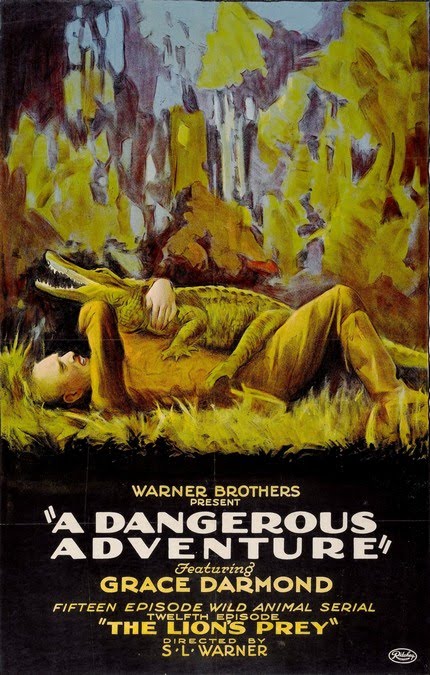
Jungle Drums, Jungle Memories!

I have been fascinated by jungle movies since I was a child under ten.  The interest was likely ignited by my Tarzan double feature at the age of eight when I saw the giant vampire bats in Tarzan Escapes, and fanned by reading all the Tarzan novels as a teenager.  At the same time I grew up watching "Ramar of the Jungle" (1952-'54), the Gunga Ram stories on "Andy's Gang" and all the adventure serials I could find on TV.

The elements that still appeal to me are the wild animal fights, crocodiles and crocodile pits, boa constrictors, men in ape costumes, elephant stampedes, vine swinging and lost kingdoms -- action, adventure, thrills & horror!  Lost in the deepest jungle of darkest Africa the resourceful hero always finds a way to save the heroine from the sudden danger that lurks behind every bush.

During the last ten years I have been re-watching films I remember from my youth like Francis the Talking Mule, Ma and Pa Kettle, Charlie Chan, all the serials, B-westerns and so on.  I am still looking for some jungle serial that I recall clearly and think I even saw twice on TV.  The first chapter ends with a plane crash in the jungle.  The second chapter ends with the hero and heroine on a narrow ledge in a deep pit full of crocodiles.  They need to walk along this treacherous ledge to reach an escape door on the other side.  Their footing crumbles... do they fall among the gators? For a long time I was sure this was one of the two Clyde Beatty serials, Mascot's Lost Jungle or the early Republic Darkest Africa, except when I watched them, no crocodile cliffhanger.  Both serials do have crocodiles in pits.  Lost Jungle's first chapter ends with a dirigible crashing.  A later ending has Clyde hanging from the rim of the pit as he grapples with a bad guy, but no scene of that ledge.  Perhaps I dreamed it all and recall the dream???

They made dozens of serials set in jungles from the silent era thru the fist sound serial King of the Congo (1929) up to the 1952 Buster Crabbe Columbia also called King of the Congo!  My favorite is Perils of Nyoka (1942) starring Kay Aldridge, Clayton Moore,  Charles Middleton and Lorna Gray.  Great plot that moves from one exotic location to another in search of a cure for cancer, slam-bang fights erupt in every new set with David Sharpe doubling for Nyoka, chases, imaginative chapter endings, a giant ape and more.  The Nyoka character (created by Edgar Rice Burroughs as a female Tarzan) also appeared in the 1941 Republic serial Jungle Girl.  I must confess I find the scantily-clad Frances Gifford the most fetching heroine in any serial.  Let's not forget The Tiger Woman (1943) serial starring Linda Stirling.

Searching for my lost serial that may not exist, I've seen some real losers in recent years.  Queen of the Jungle (1935) with Mary Kornman lost as a child and growing up to lead a jungle tribe.  The main interest was stock footage from a silent serial.  Jungle Queen (1945), with Ruth Roman battling Nazi invaders.  Jungle Raiders, 1945 Columbia serial with Kane Richmond.

However, I have just seen a jungle serial that surprised me for being quite well made and entertaining: Call of the Savage (1935, Universal). Two competing teams of scientists search the jungle for a lost formula to cure infantile paralysis.  The secret was engraved on a wrist band given to the boy Jan who disappeared 15 years before and grew up to be Noah Beery Jr.  Jan swings on vines like Tarzan, kills lions, tigers and leopards after wrestling with them, and is dressed like and talks faltering English like Tarzan, but he's still a boy (23) with an amiable smile and infectious laugh.  It takes a bit to get used to him.

You will never get used to the heroine, Dorothy Short, who screams at anything and constantly wanders off so a ferocious beast can chase her.  In the middle they dress her in a tiger skin to match footage from some silent serial.  This changes to a leopard skin outfit without comment, as pictured in a chapter ending.  While Jan grapples on a ledge with a lion, Mona backs to the edge and falls into a river infested with snapping crocs!
The jungle sets are well designed and alive with all imaginable animals: lions and tigers (yeah, together and fighting each other), crocs, tapirs, monkeys, giraffes, elephants, leopards, zebras, hyenas, gnus and some I can't identify.  There's also a man in a convincing gorilla costume.  Croc fights tiger, lion fights croc, Jan fights 'em all in hand-to-hand combat with a knife.  The fights are as good as any Tarzan movie since some stuntman really roughs it with his arm in the lion's fanged mouth.  Good animal photography of snarling tigers, etc., which may be from some silent serial.

It's a Universal serial so when they reach the lost city in chapter 10 action takes place on the Frankenstein castle set.  They use the giant bells from the 1923 Hunchback of Notre Dame, but it is newly shot footage because the monkey climbs the rope and plays with the bells, the ringing of which saves all from being speared to death at the end of chapter 11.

You can order Call of the Savage HERE. Meanwhile, I'll keep looking for that crocodile ledge that scared me as a child.

Visit my website www.fesfilms.com.

Saturday, June 4, 2011

FAQ - Why Café Roxy?

I am probably asked one question more than all others. Even if new customers don't ask it, they may well be wondering, because they find my website by making a google search on "public domain films." They already know what public domain means, so the question is some variation on:

"If all these films are in public domain, why can't I show what I got from a dollar store?" Here is an exact quote from a small theater owner last week: "Why can't I just use my private copy of the Movie? If it's public domain? You have an excellent selection and was just wondering about this!"

When I started making Café Roxy "Programs" in early 2009, I asked myself exactly the same question -- Why Café Roxy?  What could I offer special that no one else provided?  The answers are on the website, but here is a chance to spell them out again. I explained it in an email to the above theater manager. The same answers apply to TV stations adding public domain films and TV shows. If you are starting to yawn about now, jump to the bottom of this post to see his reply to my reply. Yawn....

PROGRAMS!
Each Café Roxy Program starts with a brief "Café Roxy Presents" opening fanfare.  You do not need to run this if you don't want to.  The Matinee, Horror, Turkey, etc., Roxy series contain trailers, live shorts, serial chapters, cartoons and Intermission breaks so every presentation runs close to two hours.  A Roxy logo with music concludes each show.  The "Just Classics" section contains longer films and classics that have at least one cartoon added, like the Cat O' Nine Tails poster.  The Classics have 3 minutes of exit music after a voice over says: "Thank you for coming.  Have a safe trip home."

POSTERS!
I make my own posters that list both features and shorts and have a blank area to add your show date info if you print out the posters.  You can also take the poster Jpeg off my website and put it on yours.  If the poster design appeals to you, then chances are it will work the same magic on your customers.

QUALITY GUARANTEE!
Quality of some of those dollar bin discs is all over the place.  My standard is acceptable (to excellent) viewing when projected in a 400+ seat movie theater.  I constantly seek to upgrade each show.  There are no annoying company logos or bullets in the corner of the picture like constantly show up on broadcast TV.  There is also a quality guarantee that if you get a show you don't like, then no charge.

I also screen the films before putting them into a program with an eye toward what audiences will enjoy today.  I am liberal about including westerns, B-pictures and golden turkeys, but I once discouraged a customer who wanted to buy and run "Sin Takes a Holiday" based on the title alone.  This 1930 drama with Constance Bennett and Basil Rathbone is fine viewing for Cinephiles on TV, but no one would sit through it in a theater.

PROOF OF PUBLIC DOMAIN!
Are you really sure that DVD you picked up for a dollar is in the public domain?  It says on the box and on the DVD that the FBI will pursue you for copyright infringement.  The only thing really copyrighted is the art work on the box.  I take the opposite and honest approach to inform exactly why a film or TV show is in the public domain.  You CAN run them on TV or show the films in your movie theater.  Won't you feel safer knowing why the films are public domain in case anyone asks, like the station owner?

I do put my own copyright notice -- © -- on each Café Roxy release to cover my openings and closings. This protection of new matter insures that no one can simply copy and resell the programs.  (This is the furthest thing from my users minds!)  At the same time I grant permission for theaters and TV stations to run the entire shows.

REASONABLE PRICE!
The Café Roxy pricing section had been saying $50 per program for movie theaters, with discounts for volume sales.  Most theaters who try the shows will take at least 5, which qualifies for the discount to $25 per program.  I don't want to scare you off with "$50."  I want you to try showing vintage films to audiences.  So the pricing page now reads: "For movie theaters and film societies where admission is charged -- $35 per DVD-R. Discount Price for all 12 programs of any series such as Golden Turkeys or 12 Nights of Horror: $25 per program."

FREE SAMPLE PROGRAM!
I almost forgot about this bonus.  Just ask and I will send a free Café Roxy program with shorts, serial trailers, feature excerpts, the first episode of "Beverly Hillbillies," a silent Buster Keaton short and the 1934 "Buck Rogers" film.  Run it in your theater to see how the films project.  Prepare samples for Internet streaming or TV broadcast.  Examine the range of quality.


So I told that theater owner: "Programs have cartoons, shorts and serial chapters added.  I get the best quality films, and ones without any company logos over the picture, and you can use my posters to promote your showings, and I include copyright info in case it is needed.  That is particularly useful to TV stations. Yes, you could put your own programs together if you prefer."

And he replied: "Oh, okay, now I understand that will be well worth the price then. I will defiantly keep you guys in mind when the time comes. Your set up sounds fantastic and will pass your site onto others."


Visit my website www.fesfilms.com.

Saturday, May 28, 2011

Roy's Comical Sidekick -- Pat Brady!

 In a follow up to last week's post, I offer some comments on the curious case of Pat Brady. From their first meeting in 1935 when Pat was only 21, up until Pat's early death in 1972 at the age of 57, Pat and Roy Rogers enjoyed a lifetime friendship while working together many times.  Pat appeared in 36 Roy Rogers features from 1941's Red River Valley until the last Rogers feature in 1951, Pals of the Golden West.

The curious part of these screen appearances is that Pat's roles alternated from unbilled extra as a member of the Sons of the Pioneers singing group, to second sidekick, to #1 sidekick, but not in ascending order.  One would expect him to move up to the #1 job and keep it, but he had a bigger role in Red River Valley with lines and musical  numbers than as a border patrolman in Pals of the Golden West, where Pinky Lee filled the comic relief.  Pat does ride to the rescue with the "Roy Rogers Riders" while Roy and Pinky hold off the bad guys.

Born in 1914, Pat Brady first set foot on-stage at the age of four, in a road-show production of Mrs. Wiggs of the Cabbage Patch.  From that moment he was hooked on showbiz for life. While appearing as a bass guitarist in California in 1935, Pat struck up a friendship with a young country western singer named Leonard Slye, a member of the popular The Sons of the Pioneers. When Len Slye was elevated to screen stardom as Roy Rogers, he recommended Brady as his replacement in "The Sons." However, since Bob Nolan, an original member of The Sons, was referred to as "Bob," the group thought one "Bob" was enough, so "Bob Brady" became "Pat Brady" from then on.

As a member of the Sons of the Pioneers, Pat appeared in 27 Charles Starrett westerns from 1937 to 1941.  I have seen none of these even though I taped many Starretts off the western channel about ten years ago.  Then the Sons moved up to Republic to rejoin Roy, who had been an original member.  Pat stayed on when Foy Willing and his Riders of the Purple Sage replaced the Sons.  Pat's character was sometimes called Sparrow Biffle and other times he was not even billed in the credits!


In Roy's 1942 film that was titled "Sons of the Pioneers," Pat Brady and Gabby Hayes get equal screen time as "dual sidekicks," as shown in the picture on the left.  They appear in every scene together as pals and best friends of Roy.  In a charming scene they ride together at night believing that Roy has been killed, singing a mournful song.  When Roy yodels the song in the distance Pat screams "It's a ghost!" and they hightail it. They shared the comedy in at least two other Rogers westerns of the period, and seemed comfortable doing so.


In King of the Cowboys (1943) Pat sings a comic song with The Sons, just before Roy rides off on an undercover job with sidekick Smiley Burnett!  That's it for Pat until he rides as an extra in the finale.


In Bells of Coronado (color, 1950), Pat is billed third and is Roy's one and only sidekick -- riding, fighting, getting shot and providing comedy.  But in Trigger Jr. (1950), Pat is again a comedy co-star with sidekick Gordon Jones.  

In 1951's South of Caliente Pat has little screen time opposite burlesque comic Pinky Lee (who went on to a career as TV kid show host in the 1950s).  It is fortunate for Pat's dignity that he was not asked to dress up like a gypsy or take pratfalls like Pinky was made to do.  The fact seems to be that Pat was by then part of Roy's stock company and performed whatever the script asked of him, sometimes a lot but other times little.


His loyalty and flair for comedy paid off.  When Roy moved to television from 1951 to 1957 he took Pat with him, now permanently billed as "himself" or as The Roy Rogers Show put it:
 "...and Pat Brady, Roy's comical sidekick."  Brady enlivened over 100 episodes, happily driving about the sagebrush at the wheel of his faithful jeep "Nellybelle."  Nelly was Roy's jeep that he used on his ranch.  He had noticed that kids expressed extra interest in the vehicle whenever they saw him driving around, so he ran the idea past Pat as his transportation in the TV show rather than riding a horse.  The idea was a hit with Pat, who reveled in the comedy antics of the cantankerous prop, as was the entire show.  

The Roy Rogers Show is where I first heard the term "sidekick" at an early age and where I first met Pat Brady.  I had no idea Pat appeared in so many features with Roy ... 36 ... until today when I added them up!


Visit my website www.fesfilms.com.